
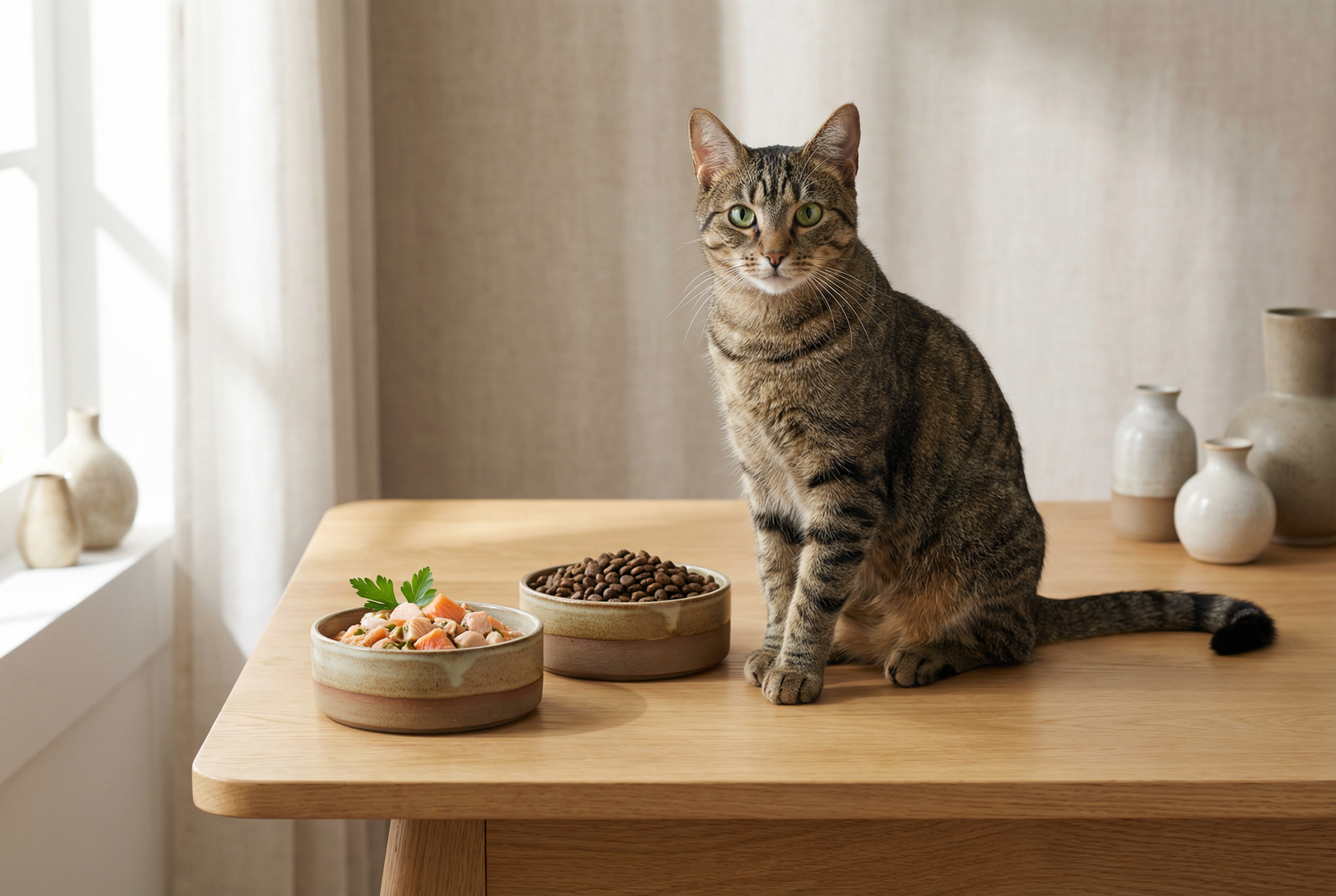
The debate between wet and dry cat food is one of the most common topics discussed in veterinary clinics. Cats are obligate carnivores, meaning their bodies are designed to derive nutrients strictly from animal tissue.
The Case for Wet Food
In the wild, cats get the majority of their water intake from their prey. Domestic cats often have a low thirst drive, making them susceptible to dehydration and kidney issues down the line. Wet food typically contains 70-80% water, making it an excellent way to keep your cat hydrated. It also generally contains more protein and fewer carbohydrates than dry kibble.
The Benefits of Dry Food
Dry food (kibble) is undeniably convenient. It is less expensive, can be left out longer without spoiling, and allows for free-feeding (though portion control is recommended to prevent obesity). Some believe kibble helps scrape plaque off teeth, though dental experts suggest specialized dental diets are necessary for true oral health benefits.
The Ideal Balance
For most healthy cats, a mixed diet offers the best of both worlds. The wet food provides necessary hydration and high protein, while the dry food offers convenience and crunch. Always ensure the food you choose meets AAFCO standards for a complete and balanced diet.